Spain is one of the most complete travel destinations in the world. World-class gastronomy — the second highest concentration of Michelin-starred restaurants on the planet — spectacular beaches, millennia of history, art, football, legendary wines, a vibrant nightlife, and a culture of savoring life that permeates every corner. It's a country where you can breakfast on churros con chocolate in Madrid, lunch on paella by the sea in Valencia, and dine on Michelin-starred pintxos in San Sebastián — all in the same day, if you hop on the AVE high-speed train.
At Vilu, we have crafted journeys across Spain ranging from week-long escapes to three-week odysseys from north to south — from the islands to the vineyards, from the volcanic landscapes of the Canaries to the cliffs of the Costa Brava. Spain truly has it all, and the combinations are virtually endless.
How Many Days Do You Need?
If Spain is your sole destination, we recommend at least 10 nights. If you're combining Spain with another country (Portugal, Morocco, France), plan for at least 7 nights in Spain.
The Great Cities
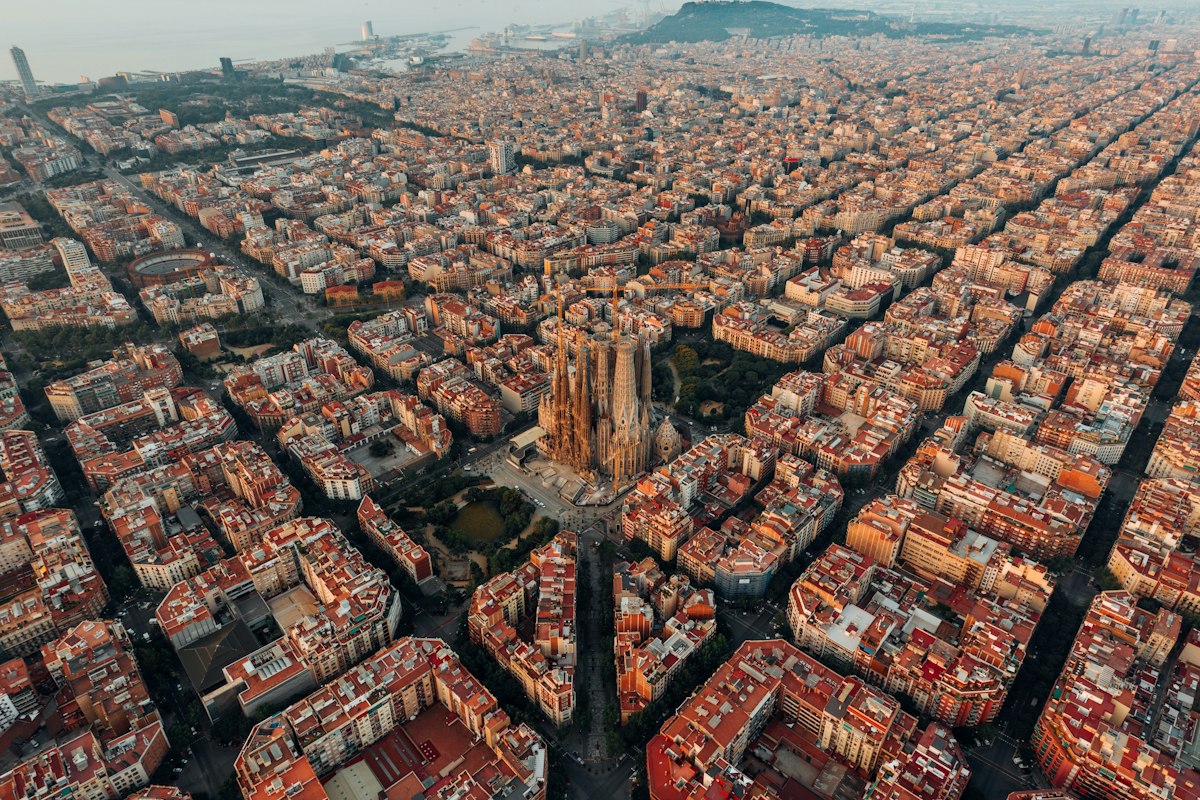
Barcelona (3–4 nights). Gaudí's city. The Sagrada Família — still under construction after more than 140 years — stands as one of the most breathtaking architectural achievements in the world. Park Güell, Casa Batlló, the Gothic Quarter, Las Ramblas, Barceloneta beach, and a culinary scene that masterfully blends Catalan tradition with bold innovation. For football lovers, attending a FC Barcelona match at Camp Nou transcends sport entirely — and we have access to exclusive in-stadium experiences.
Madrid (3–4 nights). The capital pulses with relentless energy. The Museo del Prado, the Reina Sofía housing Picasso's Guernica, the Parque del Retiro, Plaza Mayor, the La Latina neighborhood for tapas, and a nightlife that doesn't get started until midnight. Madrid's rooftop terraces with sweeping city views are simply spectacular. For football aficionados, the newly renovated Santiago Bernabéu — home of Real Madrid — is awe-inspiring, with exclusive experiences available. Madrid also serves as a perfect hub: the AVE connects you to Barcelona, Seville, and Valencia in under three hours.
The South — Andalusia
Seville (2–3 nights). The Alcázar with its lush gardens and intricate mosaics, the Cathedral with the Giralda tower, the Santa Cruz quarter with its flower-lined alleyways and fragrant orange trees, and a tapas culture that is arguably the finest in all of Spain. An authentic flamenco show in Seville is a profoundly moving cultural experience.
Córdoba (1–2 nights). The Mezquita-Cathedral is one of Europe's most astonishing structures — a forest of two-toned arches that leaves visitors utterly speechless. The Jewish quarter and the famous Cordovan patios (especially during the Patio Festival in May) are equally unforgettable.
Granada (2 nights). For many travelers, the Alhambra is the most beautiful monument in Europe. The Nasrid palaces with their fountains, gardens, and views over the Albaicín neighborhood, framed by the Sierra Nevada in the distance. We have access to exclusive experiences within the Alhambra.
Ronda. A spectacular hilltop town perched above a dramatic gorge, connected by a bridge spanning a drop of more than 100 meters.
Málaga (2 nights). Picasso's birthplace — museums, outstanding gastronomy, an urban beach, and the gateway to the Costa del Sol.
Marbella (2–3 nights). World-class beach clubs, Puerto Banús with its yachts and luxury boutiques, and a charming Andalusian old town.
Cádiz. One of the oldest cities in Western Europe, surrounded on nearly all sides by the Atlantic. Stunning urban beaches and extraordinary seafood.
Gibraltar. Technically not Spain, but right there on the doorstep. The Rock with its famous Barbary macaques, and sweeping views of the strait where Europe and Africa almost touch.
The Mediterranean Coast
Valencia (2–3 nights). The City of Arts and Sciences is a breathtaking futuristic architectural complex. The birthplace of authentic paella. Excellent urban beaches. We have access to exclusive experiences at the City of Arts and Sciences.
Costa Brava. North of Barcelona — dramatic cliffs, hidden coves, and charming fishing villages like Cadaqués (where Dalí had his home) and Tossa de Mar. Perfect for a coastal road trip.
The Wines of Spain
Penedès and Priorat (Catalonia). Prestigious Cava and bold reds just a short drive from Barcelona. Ribera del Duero (central Spain). Home to Spain's finest red wines. Rioja. The country's most celebrated wine region — including the iconic Marqués de Riscal winery, designed by Frank Gehry.
Northern Spain
Basque Country — San Sebastián and Bilbao (3–4 nights). San Sebastián is the gastronomic capital of the world — boasting more Michelin-starred restaurants per capita than any other city on the planet. The pintxos bars of the old town offer a singular culinary experience. La Concha beach ranks among the most beautiful in Europe. Bilbao is home to the Guggenheim Museum — Frank Gehry's titanium masterpiece. We have access to exclusive experiences with three-Michelin-star chefs.
Cantabria and Asturias. Green Spain — mountains tumbling down to the Cantabrian Sea, charming coastal villages such as Santillana del Mar, Comillas, Llanes, and Cudillero. The Picos de Europa for hiking. Fresh seafood and traditional cider.
Galicia — Santiago de Compostela. The legendary Camino de Santiago — walkable in as few as 4 days (the shorter route) or more than a month (the classic French Way). Seafood that rivals any coast in the world — octopus, barnacles, razor clams, scallops. Albariño wines that pair perfectly with every bite.
The Islands
Mallorca (3–4 nights). The Serra de Tramuntana (a UNESCO World Heritage Site), charming villages such as Deià, Valldemossa, and Sóller, and crystalline coves of remarkable beauty. The most versatile island in Spain.
Ibiza (3–4 nights). A tranquil north with hidden coves and boutique agrotourism retreats. A legendary south and west with world-famous nightlife. Two extraordinary personalities in one island.
Formentera. The smallest and most exclusive of the Balearic Islands. White sand, Caribbean-hued turquoise water. Accessible only by ferry from Ibiza (30 minutes).
Tenerife (Canary Islands) (3–4 nights). Two distinct worlds: beaches and resorts in the south, the volcanic Mount Teide (Spain's highest peak) at the center. Volcanic landscapes, vineyards on volcanic slopes, and spring-like weather year-round.
Getting Around Spain
High-speed trains (AVE and other operators). Madrid to Barcelona in 2.5 hours, Madrid to Seville in 2.5 hours, Madrid to Valencia in 1.5 hours. Spain now has three competing rail operators — Renfe (AVE), Ouigo, and Iryo — which has improved both pricing and service across the board.
Domestic flights. Affordable and frequent, particularly to the islands.
Road trips. The ideal way to explore Andalusia, the Costa Brava, the lush north, or the wine regions.
Private luxury driver. Transfers you between destinations in comfort, knows the best routes, and lets you enjoy the wines without a care in the world.
Exclusive Experiences with Vilu in Spain
Football. Exclusive experiences with Real Madrid and FC Barcelona — La Liga matches, Champions League fixtures, and stadium experiences unavailable to the general public.
Gastronomy. Private experiences with chefs from three-Michelin-star restaurants. Exclusive dinners and cooking classes with the world's finest culinary talent.
Culture. Exclusive access to the Alhambra in Granada, the Museo del Prado, the Reina Sofía, the Sagrada Família, and the City of Arts and Sciences in Valencia.
Best Time to Visit
April through June — Our favorite. Perfect temperatures, vibrant festivals (Feria de Abril in Seville, the Patio Festival in Córdoba). September through October is equally excellent. July and August: extreme heat in the south (40°C+) and crowded coastlines. Winter: cities virtually free of tourists, plus the Canary Islands with their perennial spring-like climate.
Combining Spain with Other Countries
Portugal. The most natural pairing. Morocco. A short ferry ride from the south. France. Barcelona connects seamlessly with the South of France.
"Vilu designed an itinerary where our kids were just as excited as we were."
Frequently Asked Questions
How many cities can you visit in 10 days?
2–3 regions at most. Barcelona + Madrid + one area of Andalusia. Or Barcelona + Costa Brava + Mallorca.
North or south of Spain?
South: Moorish history, flamenco, sunshine, and tapas. North: Michelin-starred gastronomy, lush green landscapes, and dramatic coastline. With 14+ days, combine both.
Best time for football?
La Liga season runs August through May. Champions League runs September through June. The biggest matches sell out months in advance. Our team has access to tickets and exclusive experiences.
| Region | Key Destinations | Ideal Nights | Signature Experience | Best Season |
|---|---|---|---|---|
| Catalonia | Barcelona, Costa Brava, Penedès | 4-6 | Gaudí, beach, wine, gastronomy | Apr–Jun / Sep–Oct |
| Madrid | Madrid, Ribera del Duero | 3-4 | Art, football, tapas, nightlife | Year-round |
| Andalusia | Seville, Granada, Córdoba, Ronda, Málaga, Marbella | 5-8 | Moorish history, flamenco, beach | Apr–Jun / Sep–Oct |
| Valencia | Valencia and surroundings | 2-3 | Paella, City of Arts and Sciences | Apr–Oct |
| Basque Country | San Sebastián, Bilbao, Rioja | 3-5 | Michelin gastronomy, Guggenheim | May–Oct |
| Green North | Cantabria, Asturias, Galicia | 4-7 | Coastal villages, Camino, seafood | Jun–Sep |
| Balearic Islands | Mallorca, Ibiza, Formentera | 4-7 | Coves, villages, nightlife | May–Oct |
| Canary Islands | Tenerife | 3-4 | Volcano, beach, wines | Year-round |
Is this destination on your list?
Our team of Travel Designers will contact you within 24 hours.